


When Uganda’s 11th Parliament convened under the leadership of Speaker Anita Annet Among and Deputy Speaker Thomas Tayebwa, it did so during a deeply emotional chapter in the nation’s political history. The passing of former Speaker Jacob Oulanyah had left both Parliament and the country in mourning, and there was widespread uncertainty about what direction the House would take next. From the beginning, the new leadership signaled that stability—not spectacle—would define their tenure. Rather than ushering in dramatic shifts or bold declarations, they embraced a measured approach centered on restoring order, encouraging dialogue, and rebuilding trust among Members of Parliament (MPs).
Over time, that strategy has reshaped the tone of the House. Legislators from both the ruling party and the opposition increasingly describe a Parliament that feels calmer, more respectful, and more focused on its legislative mandate. Debates that once risked devolving into shouting matches are now more structured. Procedural standoffs and walkouts—once frequent disruptions—have notably declined. In their place, many MPs cite a renewed sense of collegiality, where disagreements are handled through debate rather than confrontation.
A key driver of this shift has been the working relationship between the Speaker and her Deputy. Observers note that the two presiding officers operate in close coordination, ensuring continuity and consistency in leadership. When one is absent, the other steps in seamlessly. The result is a Parliament that appears steadier, more predictable, and better positioned to serve the country.
More Laws, Less Drama: A Parliament Focused on Productivity
Beyond the calmer atmosphere, the 11th Parliament has distinguished itself through its legislative output. Under the stewardship of Speaker Among and Deputy Speaker Tayebwa, the House has passed a record number of bills, surpassing the productivity of the previous Parliament.
This increased output has been supported by more active parliamentary committees, which are sitting more regularly and executing their mandates with greater urgency. On the floor of the House, debates have increasingly centered on the substance of legislation rather than extended political point-scoring.
Many MPs attribute this efficiency to the reduction in internal wrangles. With fewer disruptions and procedural impasses, Parliament has been able to process government business more smoothly. Bills that might once have taken months to advance are now moving through the legislative process in a more timely manner.
There has also been a noticeable rise in cross-party engagement. While political differences remain, several opposition legislators have chosen constructive participation on matters of national importance. This approach has helped reduce legislative gridlock and enabled Parliament to concentrate on its core constitutional roles: lawmaking, oversight, and representing citizens’ interests.
For the public, the transformation is visible. The institution increasingly appears focused on results rather than drama—an evolution welcomed by many who have long criticized Parliament for inefficiency and disorder.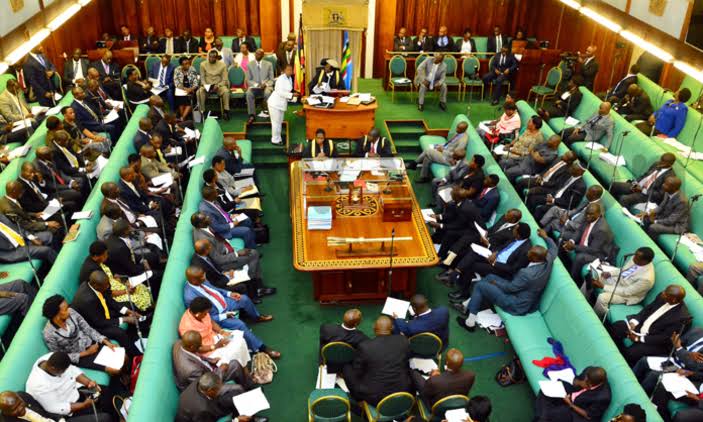
Why Museveni and the NRM Back the Current Leadership
The performance of the 11th Parliament has drawn recognition from the country’s top political leadership. President Yoweri Museveni and the ruling National Resistance Movement (NRM) have openly signaled their support for Speaker Anita Among and Deputy Speaker Thomas Tayebwa, favoring continuity in parliamentary leadership.
President Museveni has particularly commended Speaker Among’s outreach beyond Parliament. By engaging directly with communities across the country, she has drawn attention to development challenges—such as road infrastructure—and elevated them to national discussion. The President has described this approach as practical and people-centered, contrasting it with leadership styles that were more confined to office spaces.
For the NRM, unity within Parliament is viewed as essential to maintaining political stability and advancing government programs. Party officials argue that internal divisions in the House could stall legislative business and distract from development priorities. Against this backdrop, retaining the current leadership is seen as both strategic and stabilizing.
Among many MPs, there is a prevailing sense of satisfaction with the status quo. With Parliament functioning more smoothly, passing laws efficiently, and maintaining internal harmony, there appears to be limited appetite for disruption. For supporters of the current leadership, the reasoning is straightforward: if the system is delivering results, continuity offers the surest path forward.
